
Quality control in SPC flooring manufacturing is not a single inspection step, but a complete system that runs through raw materials, production, and finished goods.
Buyers who only focus on final inspection often overlook the root causes of quality issues that appear months after installation.
In real manufacturing environments, most quality claims originate upstream rather than at the packing stage.
Buyers should evaluate quality control as a process system, not only final inspection.
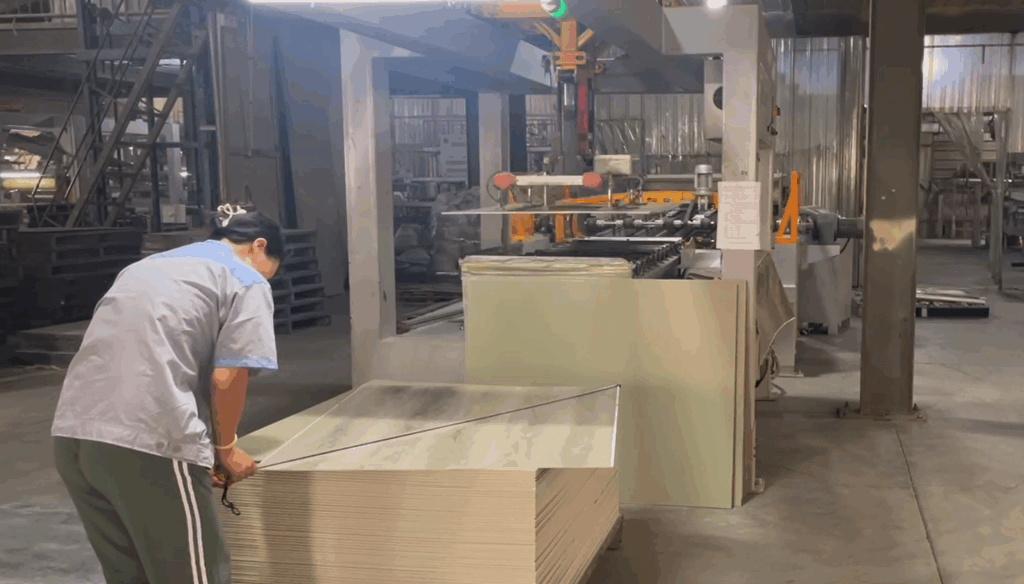
Raw Material Control: The Root of Stability
Stable SPC flooring starts with raw material consistency. Variations at this stage directly affect dimensional stability, click performance, and long-term durability.
Key points buyers should check include:
- PVC resin consistency and supplier stability
- Limestone ratio control within the core formulation
- Stabilizer formulation management and batch traceability
- Incoming raw material inspection records and approval procedures
A factory with disciplined raw material control maintains clear batch records and rejects non-conforming materials before production begins.
One-line risk:
Unstable formulas lead to warping, brittleness, and joint failure.
Core Extrusion Control: Tolerance and Density Management
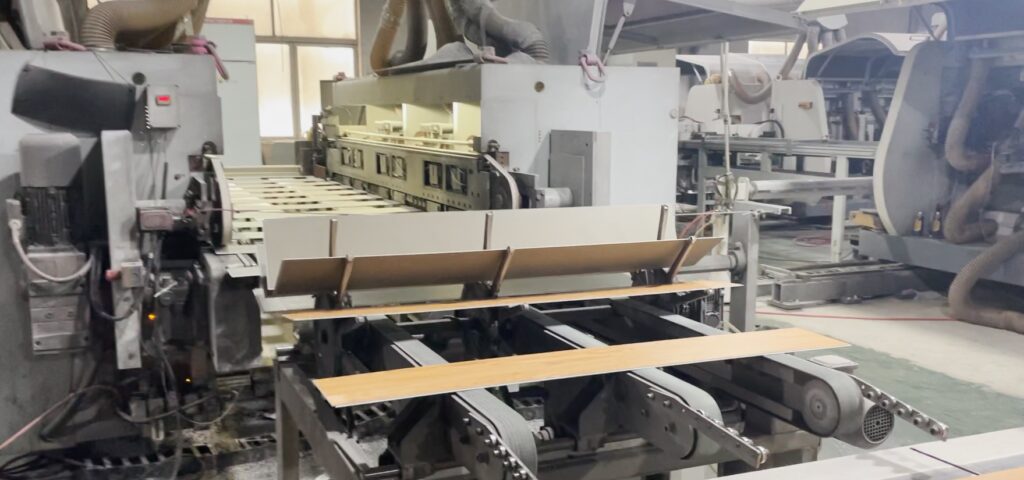
Core extrusion is the most critical production stage for SPC flooring, as it defines the product’s physical performance and installation reliability.
Important control points during extrusion include:
- Thickness tolerance control across the full plank width
- Density stability to ensure rigidity and impact resistance
- Cooling process consistency to prevent internal stress
- Profile calibration to guarantee accurate click fit and locking strength
Factories with strong extrusion control rely on continuous monitoring rather than spot checks, ensuring each batch meets the same structural standard.
Finished Product Inspection: Export-Ready Checks
Finished product inspection ensures that SPC flooring is suitable for shipment and market use, but it should serve as confirmation—not correction—of upstream control.
Typical quality control tests include:
- Locking strength tests to verify click system performance
- Dimensional stability tests under temperature variation
- Wear layer verification and abrasion resistance checks
- Visual grading, carton inspection, and packaging accuracy
Consistent inspection records indicate that quality standards are applied uniformly, not selectively.
Conclusion
Effective quality control in SPC flooring manufacturing depends on controlling variables before problems appear, not reacting after shipment.
A reliable supplier controls variables upstream, so buyers face fewer claims downstream.
For brand owners and distributors, quality control requirements should always be aligned with the OEM and private label production process.